Sibling Fights: When to Step In, When to Stay Out, What to Say
Step in when a sibling fight turns physical, cruel or one-sided; stay out of ordinary squabbles. Includes what to say and how to coach kids.
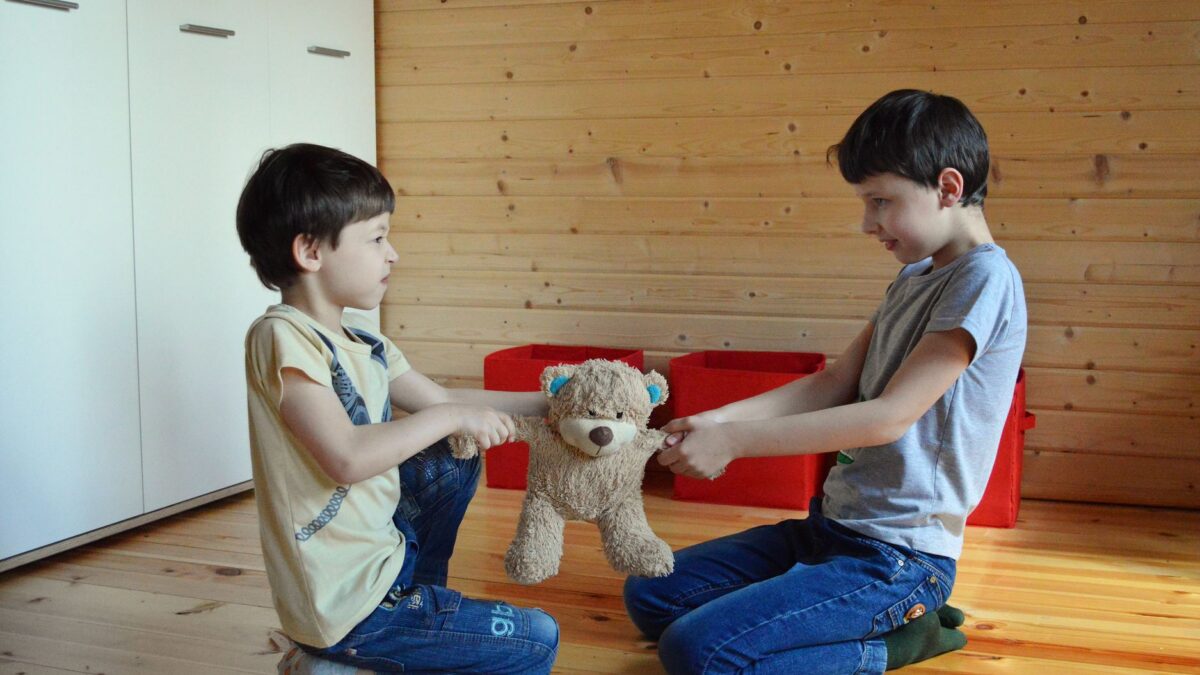
Parents should step in when a sibling fight involves hitting, injury, cruelty or one child clearly overpowering the other, and can stay out of ordinary squabbles over toys, turns and seats. When you do step in, separate the children, calm things down first and talk about the problem afterward. The words you use matter more than the verdict.
Most sibling conflict is normal. Children share a home, a parent’s attention and a lot of stuff, so friction is expected. The goal is to protect safety and teach skills, not to prevent every argument.
When should I step in right away?
Step in at once when any of these happens:
- One child is being hit, bitten, pinned, thrown at or hurt in any way.
- Someone is using an object as a weapon, or the fight is near stairs, a street or something breakable.
- One child is much bigger, older or stronger and the other cannot defend or leave.
- The words are meant to wound: repeated name-calling, threats, mocking a child’s body or humiliating them in front of others.
- A child is frightened, crying hard or trying to escape.
Calm, firm words come first: "Stop. Hands down. Separate corners." Then check whether anyone is hurt before you ask what happened.
When is it fine to stay out?
Staying out is reasonable when the children are close in age and size, the argument is loud but not physical, and both can walk away. Arguments about who sits where, whose turn it is or who changed the channel are practice for negotiating and compromise. If you rescue every time, children learn to call for a referee instead of solving the problem.
A useful middle step is to stay nearby without joining. Listen from the next room. If the volume rises or the tone turns mean, move closer and say something short, such as "I can hear this getting heated. Can you two work it out, or do you need help?"
What should I say when I step in?
Describe what you see and skip the judge’s role. Compare these:
- "You both want the red controller, and neither of you will let go." This names the problem.
- "Who started it?" This invites each child to blame the other and rarely gets a true answer.
A short sequence works for most conflicts:
- Separate the children and let everyone cool down. A few minutes is often enough for younger kids, and older children may need longer.
- Name the feelings: "You were angry that your brother took your book."
- Let each child say their side without interruption.
- Ask for ideas: "What could we do so you both get a turn?"
- Pick one solution together and check on it later.
Avoid comparing the children ("Why can’t you be more like your sister?"), labeling one as the troublemaker, or always siding with the younger one. Each of these builds resentment, which feeds the next fight.
Should I punish both children?
Hurting someone gets a consequence for the child who did it, and that consequence should be the same no matter who is older or younger. For a squabble where both children were arguing and nobody was hurt, a shared reset, such as a break from the toy or from each other, is simpler than trying to sort out blame. Keep consequences short, specific and calm. Yelling teaches the lesson you are trying to prevent.
How do I make fights less frequent?
Prevention takes some of the load off in the moment.
- Set a few family rules. Keep them short and positive, such as "We use gentle hands" and "We ask before we borrow." Repeat them calmly.
- Give each child one-on-one time. Even 10 to 15 minutes of undivided attention a day can reduce attention-seeking through conflict.
- Protect personal space and belongings. A shelf or box of things that do not need to be shared lowers tension over toys.
- Watch the triggers. Fights often cluster when children are hungry, tired, bored or stuck together in a small space. A snack, a break or a change of room can do more than a lecture.
- Praise cooperation. Notice when they share, wait or settle something themselves.
Shared tasks can create friction too. If homework time keeps ending in arguments, the tips in this guide to math homework help can reduce the pressure on everyone. On trips, fights tend to rise when families are in tight quarters, and a plan for quiet time and space helps, as in a first family camping trip, where everyone shares a tent and a campsite.
When should I talk to a pediatrician?
Ask your child’s pediatrician for advice if fights cause injuries, if one child is regularly afraid of another, if aggression seems to be getting worse or is out of proportion for the child’s age, or if arguments come with major changes in mood, sleep or school behavior. A doctor can check for underlying causes and point to local support. The Centers for Disease Control and Prevention publishes general parenting and child development information for families.
Quick answers
Is sibling rivalry normal?
Yes. Competition for attention, space and belongings is common in most homes with more than one child, and it usually eases as children get older and develop their own interests.
Should I always make the older child give in?
No. Always siding with the younger child teaches the older one that fairness is not on offer, and it can make the younger one dependent on you to win. Look at what happened, not at ages.
What if my child says I am unfair?
Listen to the complaint and explain that fair means each child gets what they need, which is not always identical. Then ask what they think would be fair in this case.
Can I let them fight it out?
Only when both children are evenly matched, nobody is being hurt and either child can leave. Once it becomes physical or one-sided, step in.