Backyard Games for Kids: Cheap Classics by Group Size and Age
Most of the best backyard games need a ball, a bit of chalk or nothing at all. Here are the classics, sorted by group size, age and supplies.
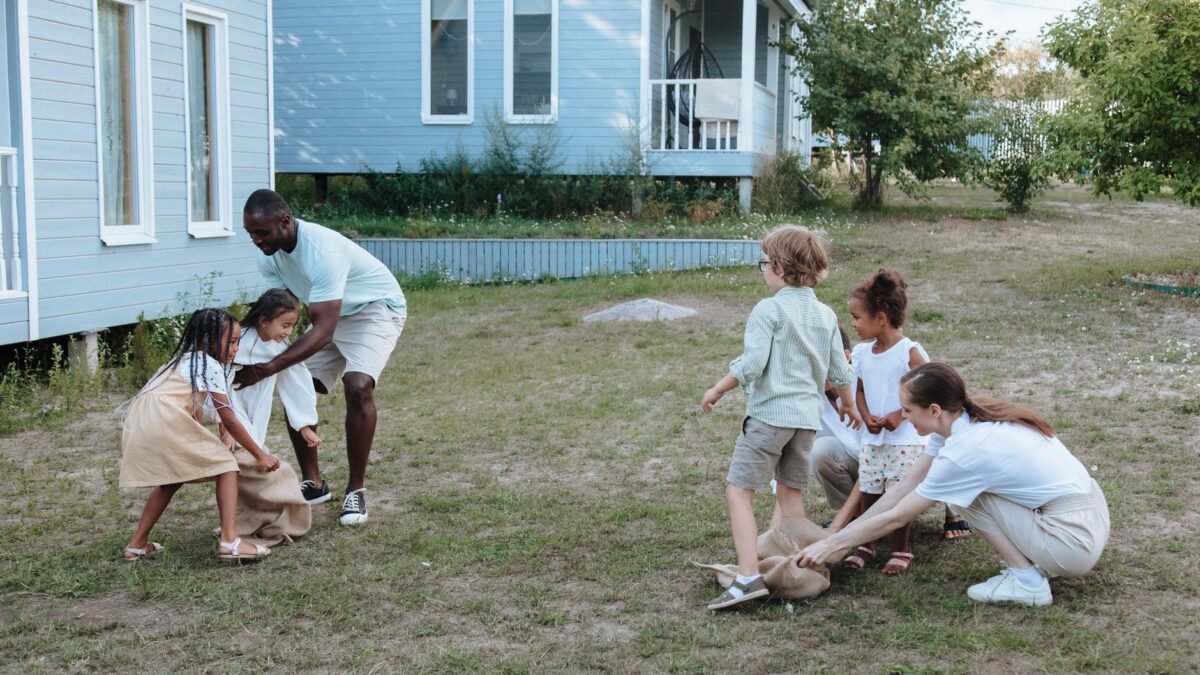
The best backyard games for kids use things you already own: a ball, sidewalk chalk, a rope, buckets or nothing at all. Pick games by group size and age. Tag, Red Light Green Light and sponge relays work with almost any group, and a driveway with chalk works as well as a big yard.
Games at a glance
| Game | Group size | Ages | Supplies |
|---|---|---|---|
| Red Light, Green Light | 3 or more | 3 and up | None |
| Freeze tag and shadow tag | 3 or more | 4 and up | None |
| Simon Says | 2 or more | 3 and up | None |
| Hopscotch | 1 to 6 | 4 and up | Chalk, a small stone or beanbag |
| Bean bag toss | 2 to 6 | 3 and up | Beanbags or rolled socks, a box or hula hoop |
| Bottle bowling | 2 to 6 | 4 and up | Plastic bottles, a soft ball |
| Sponge relay | 4 or more | 4 and up | Sponges, two buckets |
| Four square | 4 | 6 and up | Chalk, a bouncy ball |
| Kickball or wiffle ball | 6 or more | 6 and up | Ball, bases |
| Capture the flag | 8 or more | 7 and up | Two flags or scarves |
| Obstacle course | 2 or more | 3 and up | Cones, hoops, rope, cushions |
| Flashlight tag | 4 or more | 7 and up | Flashlights, a dusk yard |
For one or two kids
- Chalk hopscotch and obstacle trails. Draw a path with jumping squares, balance lines and zigzags. Kids make up their own rules.
- Target toss. Draw a bullseye with chalk or set out a bucket and toss beanbags or rolled socks at it. Step back one pace after each success.
- Bottle bowling. Set up empty plastic bottles as pins and roll a soft ball. For extra weight, fill the bottles with a little water or sand and cap them.
- Egg-and-spoon race. Use a spoon and a plastic egg or small ball. Add obstacles for older kids. For spring, see Easter egg hunt ideas by age.
- Backyard bird or bug watch. Give each child a paper tally sheet and see how many different ones they can spot. For ready-made find-it lists, try our nature scavenger hunts.
For a small group (3 to 6)
- Red Light, Green Light. One child is the stoplight. Players move on green and freeze on red.
- Simon Says. Give a mix of silly and active commands such as hop, spin and touch your toes.
- Freeze tag. The tagged player freezes until another player tags them free.
- Shadow tag. On a sunny day, players tag by stepping on one another’s shadows.
- Four square. Draw a big square split into four. Players bounce the ball to each other and move up when someone is out.
- Relay races. Hop, crab-walk, bear-walk or carry a beanbag on your head to a marker and back.
- Three-legged race. Tie two ankles together with a soft scarf or bandana, not rope.
For a bigger group (7 or more)
- Capture the flag. Two teams hide a flag and try to snatch the other’s. Set clear boundaries and a “safe” zone.
- Kickball or wiffle ball. A soft ball and bases made from towels or pieces of cardboard are all you need.
- Sponge relay. Each team uses a sponge to move water from one bucket to another. The team with the most water wins.
- Kick the can. A hide-and-seek and tag mix using a plastic can or bucket.
- Treasure hunt. Hide small, safe items and write simple clues. Older kids can design the hunt for younger ones.
- Flashlight tag at dusk. Use only in a fenced or safe yard, with a firm boundary.
Games for toddlers and mixed ages
Toddlers love to join in, but need simple roles. Let them be the “judge,” the “starter” or the one who rings a bell. For mixed ages, try these ideas:
- Give younger kids a head start in races and tag.
- Mix the teams. Put an older child with a younger one.
- Use two sets of rules. For example, older kids throw from farther back.
- Make a “no one is out” rule. Swap elimination for points or turns.
For more ideas for ages three to five, see our outdoor play ideas for preschoolers.
Set up the yard for safety
- Walk the yard first. Look for holes, rocks, sprinkler heads, sticks, pet waste and anything sharp.
- Set boundaries. Mark the play area with cones or chalk and keep kids away from the street, the driveway, grills, fire pits and fences or gates that open to a road.
- Wear shoes. Wet grass and hard surfaces are slippery in bare feet.
- Offer water breaks. Keep a jug and cups in the shade.
- Use sun protection. The AAP has tips on sunburn and sunscreen.
- Watch water play closely. Sprinkler games and sponge relays are low-risk, but young children can drown in very little water. Stay within arm’s reach of toddlers around any buckets, pools or tubs, and see the AAP’s water safety tips.
- Be careful with balloons. The CPSC warns that children under 8 can choke or suffocate on uninflated or broken balloons. Water-balloon games need close supervision, and every piece should be picked up right away. Sponges are a safer substitute.
Keep the game going
Most backyard games are over faster than you think. Keep rounds short, let kids change the rules and rotate games every 10 to 15 minutes. Save a chalk-and-ball game for the last half hour as a wind-down. If the weather turns, our list of rainy day activities has backups.
Bottom line
You do not need equipment to fill a backyard afternoon. Pick two or three games by group size and age, check the yard for hazards, keep rounds short and adapt the rules when ages are mixed. Chalk, a ball and a few buckets cover most of the list above.
FAQ
What backyard games work for a big group?
Capture the flag, kickball, sponge relays, kick the can and treasure hunts all work well with seven or more kids. Assign teams ahead of time so no one is picked last.
What can toddlers play in the yard?
Simple games: chasing bubbles, kicking a soft ball, tossing beanbags into a basket, following a chalk line and splashing in a shallow tub with an adult within arm’s reach.
How do you keep older and younger kids playing together?
Mix the teams, give younger kids a head start, use different distances or rules for each age and let older kids lead.
What if a game gets too rough?
Pause and reset the rules. Switch to a cooperative game, such as an obstacle course or a treasure hunt, where kids work together instead of against one another.