Boredom Jar Ideas: How to Make One and 50 Activity Slips to Put In It
A boredom jar turns "I'm bored" into a quick pick instead of a standoff. Here is how to make one together, plus 50 ideas sorted by time and energy level.
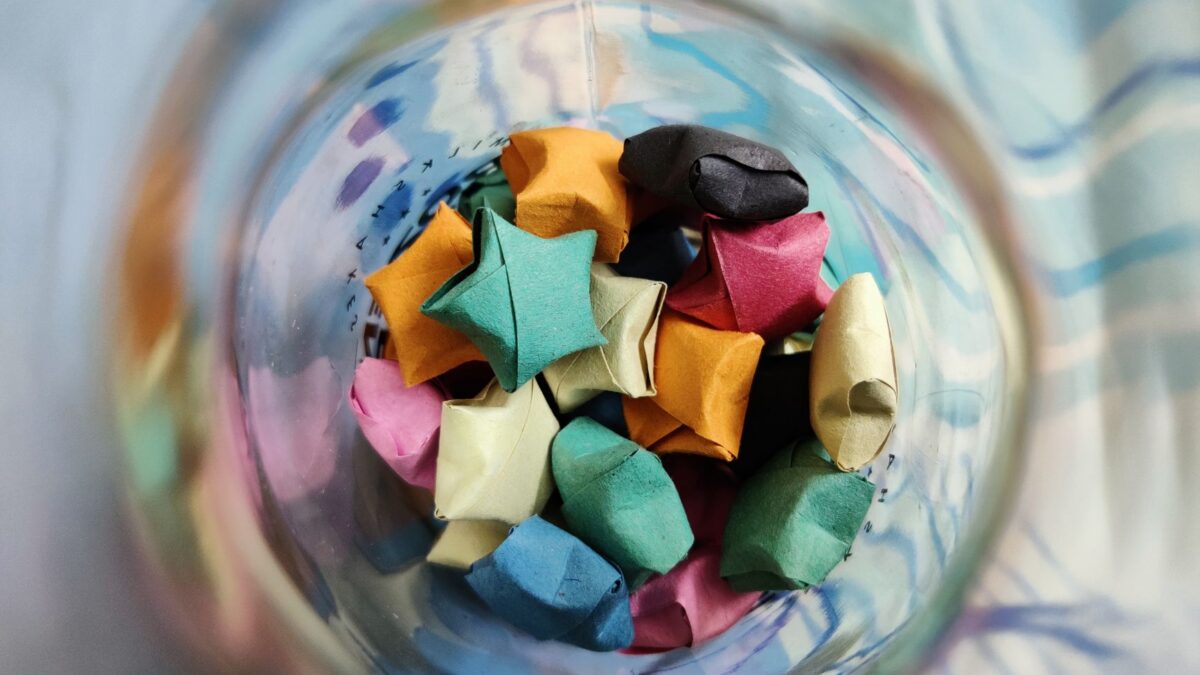
A boredom jar is a container of folded activity slips that kids draw from when they say “I’m bored.” To make one, have the family write ideas together, sort them by time and energy level using colored paper, and set two or three simple rules for using it. The sections below cover the steps, a starter list of 50 ideas and ways to keep the jar fresh.
What a boredom jar is for
Most kids can come up with something to do once they have the first idea. The jar gives them one, without a parent having to become the activity director. It also moves the job of idea-making from you to the family, which makes kids more likely to use the ideas they helped write.
It does not need to fill every free minute. The American Academy of Pediatrics’ 2018 clinical report on play, “The Power of Play,” encourages families to protect time for unstructured play, so a jar works best as a starting point for kids who are stuck, not a schedule. If a child wanders off to build something without drawing a slip, the jar did its job anyway.
How to make a boredom jar
- Pick the container. A mason jar, a coffee can or a shoebox with a hole all work. Let the kids decorate it with paper, stickers or markers.
- Gather three colors of paper. Use one color for each energy level: calm, medium and high energy. Strips of scrap paper are fine.
- Hold an idea-writing session. Set a timer for 15 minutes. Everyone writes as many ideas as they can on the right color. Parents write too, but let kids write the most.
- Add time tags. Write a number on the slip for the minutes it takes, such as 10, 30 or 60. For pre-readers, draw a picture instead of using words.
- Review the slips. Remove anything that needs a screen, costs a lot or needs an adult for the whole time, unless you want those ideas in the mix.
- Fold and fill. Fold each slip and drop it in. Keep the colors together or mix them, depending on whether kids can choose their energy level.
- Set the rules. Draw one slip, try it for at least 10 minutes and do not reroll more than once.
- Put it where kids can reach it. The kitchen counter or a low shelf works well.
Sorting slips by time and energy
| Color | Energy | Best moments | Time |
|---|---|---|---|
| Blue | Calm | Before dinner, after school, quiet hour | 10 to 30 minutes |
| Yellow | Medium | Weekend mornings, rainy afternoons | 20 to 45 minutes |
| Red | High energy | When cooped up, after lots of sitting | 10 to 30 minutes |
50 starter ideas
Calm (blue slips)
- Draw your favorite animal, then draw its home.
- Write a short story about a lost sock.
- Build a pillow nest and read in it.
- Make a paper airplane and decorate it.
- Do a puzzle for 15 minutes.
- Write a letter to a grandparent or a friend.
- Make a bracelet from string or pipe cleaners.
- Listen to a podcast or audiobook and draw what you hear.
- Sort a bag of coins or buttons by color and size, with an adult nearby.
- Build the tallest tower you can with books and cups.
- Plan a dream vacation and draw the map.
- Copy a drawing from a favorite book.
- Write a menu for a restaurant and take your family’s order.
- Make a “mini zoo” with stuffed animals.
- Learn three words in another language.
- Do a coloring page.
- Fold origami animals from scrap paper.
- Make a list of ten things that make you laugh.
Medium (yellow slips)
- Put on a puppet show with socks.
- Build a fort with blankets and chairs.
- Bake something simple with an adult.
- Make a scavenger hunt for someone else.
- Make a poster for your door with drawings and a “come in” sign.
- Create a board game with paper and dice.
- Have a family talent show with a one-person audience.
- Make an obstacle course with tape. Our guide to indoor obstacle course ideas has layouts.
- Paint rocks or draw on paper bags.
- Write and act out a short play.
- Do a science experiment with kitchen items.
- Make a card for someone who needs cheering up.
- Start a nature journal with a drawing from the window.
- Wash the car or the dog’s bowls, with a parent’s help.
- Take photos of ten things that are blue.
- Cook a snack for the family, with a grown-up in the kitchen.
High energy (red slips)
- Do a 10-minute dance party.
- Run the hallway course three times and beat your time.
- Play hide-and-seek with a stuffed animal.
- Do jumping jacks while the family counts.
- Race around the yard or the block with an adult.
- Play Simon Says with a sibling.
- Hold a balloon-keep-up game with an adult, with broken balloons picked up at once. Balloon pieces can be a choking hazard for young children.
- Do a yoga routine and invent your own poses.
- Make an animal walk race across the room.
- Throw rolled socks at targets.
- Play freeze tag in the backyard.
- Do a family workout where each person invents one move.
- Play “the floor is lava” for five minutes.
- Walk around the neighborhood to find three funny signs.
- Hop, skip and tiptoe from one end of the house to the other.
- Do a ten-minute clean-up race and pick the music.
Rules that keep the jar working
- Everyone writes some. Kids use ideas they wrote more often.
- Add new ideas each month. Hold a quick “refill” session on the first of the month.
- Retire the flops. Take out slips that never get used.
- Keep it fair. Parents draw too, so it is not just a kid thing.
- Decide about screens. Many families leave screens out of the jar. Others add a limited-time screen slip.
- Do not use it as punishment. It works best as an offer, not as a consequence.
Versions for different ages
- Toddlers and preschoolers: use pictures instead of words, and make most slips adult-led, such as “blow bubbles with a grown-up.”
- School age: add time tags and let kids choose a color. They can also write for younger siblings.
- Tweens and teens: a jar may feel babyish, so try a list on the fridge or a “challenge deck” of cards instead.
For more ideas beyond the jar, browse the screen-free activities by age list, a set of rainy day activities or our plan for a snow day.
Bottom line
A boredom jar is a simple, cheap tool: write ideas together, sort them by color for energy level, add time tags and keep the rules short. Refresh it monthly, retire the flops and treat it as an offer rather than a requirement. Some bored moments are fine, and the jar is there for the times a child needs a nudge.
FAQ
What age is a boredom jar for?
Ages 4 to 10 get the most use from it. Younger children need picture slips and an adult, and older kids may prefer a list or a deck of challenge cards.
What if a child ignores the jar?
That is fine. Kids sometimes find their own thing, which is a good result. If it keeps happening, ask them to write new slips that sound more fun, and try pulling a slip together once as a model.
Should screen time be in the boredom jar?
That is a family choice. Some families leave screens out so the jar stays a screen-free option, and some include a rare slip with a set time limit. Talk to your pediatrician if you have questions about screen time for your child’s age.
How many slips does a jar need?
Twenty to thirty is enough to start, and 50 gives a good range across energy levels. Add new ones regularly so it does not get stale.