How to Help a Child Who Hates Reading: Practical Ideas by Age
Help a child who hates reading by letting them choose books, reading aloud daily and checking for vision or learning problems. Ideas by age inside.

To help a child who hates reading, take the pressure off, let them choose what they read (comics, magazines and joke books count), and keep reading aloud to them even after they can read alone. If the dislike comes with real struggle, such as guessing at words, headaches or tears over homework, ask the school and your pediatrician to check for vision problems or a learning difference like dyslexia. Most reluctant readers come around when reading feels easy and connected to things they already like.
Why do some children hate reading?
A child usually says “I hate reading” for one of a few reasons, and the fix depends on which one applies:
- Reading is hard for them. Decoding words takes so much effort that the story gets lost.
- The books are wrong. Assigned titles may be too difficult, too babyish or simply about things they don’t care about.
- Reading feels like a test. Logs, timers and quizzes can turn a book into a chore.
- Other things win. Screens and games give faster rewards than a chapter book.
- They have never seen it as fun. Children copy what adults around them do.
Watch your child read for a few minutes. A child who reads smoothly but is bored needs different books. A child who stumbles, skips lines or tires quickly may need extra help.
What works for toddlers and preschoolers?
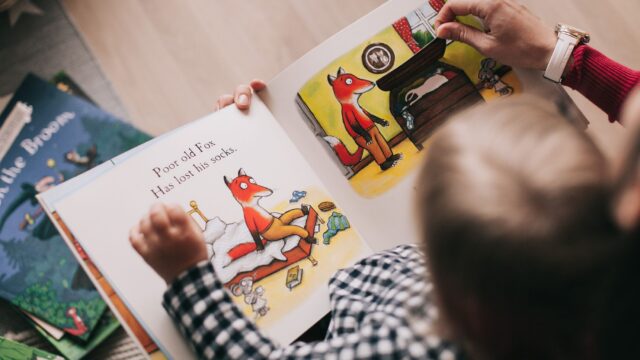
At this age the goal is to make books part of ordinary, cozy routines. Children this young cannot hate reading for long if it means sitting close to a parent.
- Read aloud every day, even for a few minutes, and let your child pick the same book again and again.
- Choose sturdy board books, lift-the-flap books and books with rhymes, songs or animal sounds.
- Let them turn pages, point at pictures and finish familiar lines.
- Stop when they lose interest. A short, happy session beats a long one that ends in a fight.
- Read signs, cereal boxes and menus out loud while you go about your day.
How do you help an early reader age 5 to 7?
Early readers often dislike reading because it is still slow and tiring. Keep their own reading short and easy, and keep reading harder, more exciting books to them.
- Take turns: you read a page, they read a line or a page.
- Pick books they can read with few mistakes. Struggling on every word kills interest.
- Try simple comics and graphic novels for beginners, which carry the story through pictures.
- Praise effort and specific wins (“you sounded out that long word”) instead of speed.
- Ask the teacher which phonics sounds the class is learning and look for books that practice them.
Pairing reading with hands-on projects helps too. Reading a simple recipe together while cooking, or the steps on one of these no-fuss appetizers kids can help make, gives a reason to read that has nothing to do with school.
What helps a reluctant reader age 8 to 12?
Children in this range often read well enough but find chapter books dull or long. Choice and interest matter more than reading level now.
- Follow their passions: sports, animals, Minecraft, space, cooking or true disasters. Nonfiction and how-to books count as real reading.
- Offer graphic novels, series books and short story collections. Finishing a book quickly builds momentum.
- Try audiobooks on car rides. Listening to a story still builds vocabulary and a love of plots.
- Let them read the book version of a movie or show they enjoyed.
- Visit the library often and let them check out anything, even books you think are too easy.
- Drop reading logs at home if they cause fights, while still following any school requirement.
Some families add a quiet reading time to their evening routine and use it as one of their screen-free activities at home and on the road.
How do you get a teenager to read?
Teenagers resist anything that feels like an order, so give them control and respect their taste.
- Leave magazines, manga, sports biographies and popular young adult novels around the house without comment.
- Count articles, long online pieces and song lyrics as reading.
- Ask about what they are reading the way you would ask about a show, without quizzing.
- Connect reading to goals: driving manuals, recipes, job applications, game guides or a hobby they want to learn.
- Let them see you read for pleasure.
When is it more than a dislike of reading?
Talk to your child’s teacher and pediatrician if you notice signs that reading is physically or mentally harder for your child than for classmates. Common signs include:
- Trouble matching letters to sounds or remembering common words well past first grade
- Reversing or mixing up letters and words long after peers have stopped
- Rubbing eyes, squinting, covering one eye, losing their place or complaining of headaches while reading
- Reading aloud that stays very slow and effortful
- Strong spoken vocabulary but poor reading and spelling
A school vision screening can miss some problems, so ask whether a full eye exam is needed. The National Eye Institute has plain-language information on children’s vision. For possible learning differences, you can ask the school in writing for an evaluation, and the National Institute of Child Health and Human Development explains reading disabilities such as dyslexia. Early support works better than waiting for a child to grow out of it.
What mistakes make reading worse?
- Using reading as a punishment, or taking away screens until pages are done in a way that feels like a penalty
- Correcting every mistake while the child reads aloud
- Comparing them with siblings or classmates
- Banning comics, graphic novels or “easy” books
- Making them finish every book they start
Small rewards can help a child get started, such as a trip to the library or bookstore. Books also make good presents; this list of gift ideas for kids by age under $25 has options that hold attention past the first week.
Quick answers
Do graphic novels count as real reading?
Yes. Graphic novels use full sentences, new vocabulary and complex plots, and children still have to follow the story and make sense of it. Many reluctant readers move on to other books after finishing a series they love.
Are audiobooks cheating?
No. Audiobooks build vocabulary, listening skills and understanding of stories. Following along in the printed book while listening can also help a struggling reader connect spoken and written words.
How long should a child read each day?
There is no single right amount. Short, regular sessions that end on a good note work better than long ones forced through tears. Follow any amount the teacher sets, and add reading aloud together on top.
Should I pay my child to read?
Cash per page tends to make reading feel like a job. Small, book-related rewards, like choosing the next book or staying up a little later to read, keep the focus on reading itself.