Rainy Day Activities for Kids That Need Almost No Setup
A good rainy day mixes quiet and loud. Here are low-setup ideas sorted by energy level, with picks for toddlers, school-age kids and tweens.
The best rainy day activities for kids need almost no setup and alternate between quiet and high energy. Start with something that burns off steam, such as an obstacle course or dance party, then move to a calm activity like drawing, reading or a puzzle. Pick from the lists below and keep a few supplies in a “rainy day” bin.
Ideas at a glance
| Energy level | Ages 2 to 4 | Ages 5 to 8 | Ages 9 to 12 |
|---|---|---|---|
| Quiet | Picture books, sticker pages, play dough | Coloring, comics, puzzles, audiobooks | Journals, card games, sketching, model building |
| Medium | Blanket fort, “cooking” with kitchen tools, water play in the tub or sink | Indoor treasure hunt, simple crafts, board games | Baking, a short stop-motion video, a cooking challenge |
| High energy | Dance party, bean bag toss, pillow crawling | Obstacle course, balloon keep-up, floor is lava | Charades, hallway sock hockey, workout circuit |
Quiet activities (low energy)
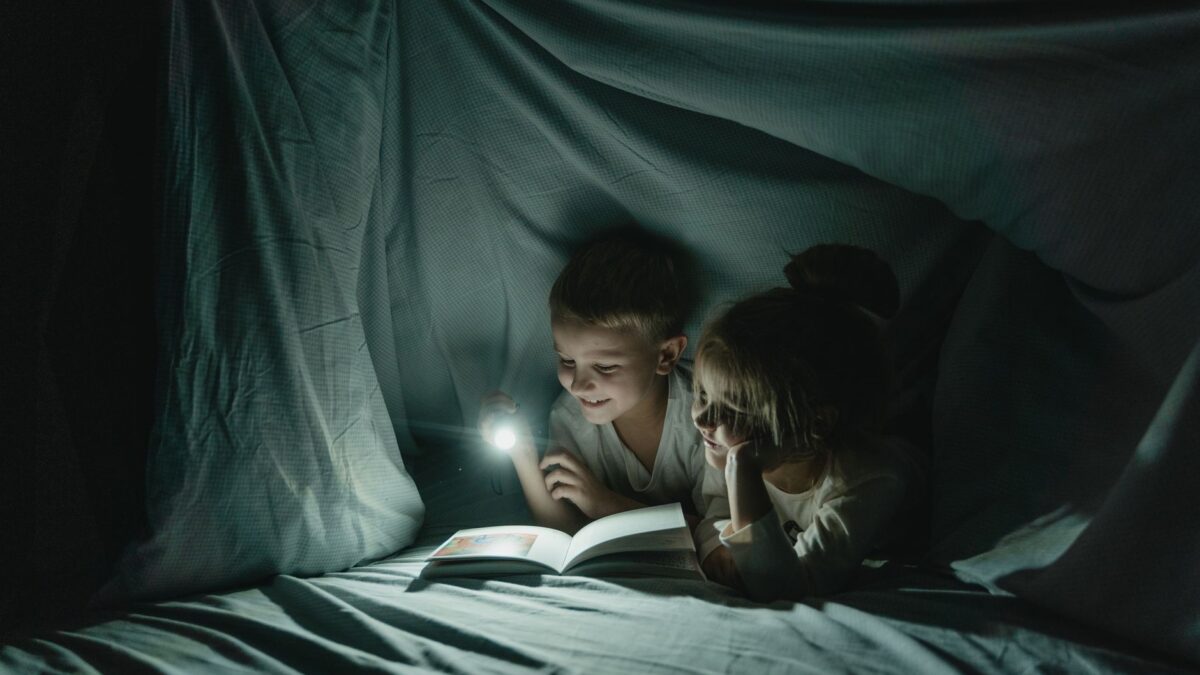
- Reading nook. Pile blankets and pillows in a corner, add a flashlight and let everyone pick a book.
- Draw-along or story drawing. One person draws a line, the next adds to it, and the group makes up a story about the result.
- Puzzles and building toys. Pull out a puzzle, blocks or interlocking bricks, and set a timer to see what gets built in 15 minutes.
- Audiobook picnic. Lay a blanket on the living room floor, bring a snack and listen together.
- Sort and organize. Younger kids love sorting buttons, socks, coins or blocks by color, size or shape.
- Letters and cards. Write a letter or draw a card for a grandparent, neighbor or friend.
Medium-energy activities
- Blanket fort. Drape blankets over chairs and the couch and weigh down the edges with books. Add a flashlight.
- Indoor treasure hunt. Hide a small prize and write clues in simple rhymes or pictures for younger kids.
- Cook something easy. Pancakes, muffins or a no-bake snack let kids measure, stir and taste. Adults handle the oven and knives.
- Craft from recycling. Cardboard tubes, boxes and paper become robots, castles or puppets. Our guide to easy DIY crafts for kids has plenty of ideas.
- Kitchen science. Try sink-or-float, color mixing or making a simple ice-melting experiment. See our easy science experiments at home.
- Pretend play. Set up a restaurant, a vet’s office or a store with stuffed animals as customers.
- Board and card games. Pull out whatever you have, or invent a game with a die and a few cards.
- Stop-motion movie. Older kids can use a phone or tablet and a few toys to make a short film, a screen activity that still involves creating.
High-energy activities (burn off steam)
- Dance party and freeze dance. Play music, then pause it and make everyone freeze in a silly pose.
- Obstacle course. Cushions to climb, a tape line to balance on and a laundry basket to toss socks into. Our guide to an indoor obstacle course has layouts by age.
- Floor is lava. Cushions and pillows are safe stepping stones. Clear the room of hard or sharp objects first.
- Animal walks. Bear crawl, crab walk, frog hop and snake slither down the hallway.
- Balloon keep-up. Keep a balloon off the floor using only hands, elbows or heads. Balloons are a choking hazard for children under 8 when uninflated or broken, so supervise and pick up pieces right away.
- Sock skating or sock hockey. Slide in socks on a smooth floor with a soft ball. Move the furniture away from the play area and watch for slips.
- Charades or Simon Says. Great for groups and for tweens who want to be silly.
- Rain puddle outing. If there is no thunder or lightning, put on boots and rain jackets and take a walk to splash in puddles. Come back to hot chocolate and dry clothes.
A sample rainy day rhythm
- Morning: a short high-energy burst, such as a dance party.
- Mid-morning: a hands-on activity, such as a craft or baking.
- Lunch: a picnic on the living room floor.
- Early afternoon: quiet time with books, puzzles or an audiobook.
- Late afternoon: a second burst of movement, like an obstacle course.
- Evening: a family game or movie night, with popcorn only for kids old enough to eat it safely.
The American Academy of Pediatrics lists popcorn among the choking hazards for children under 4, so offer another snack to toddlers.
Make rainy days easier
- Keep a rainy day bin. Fill a box with craft supplies, a deck of cards, a puzzle, a few new books from the library and a small toy for a surprise.
- Write ideas on slips. Our boredom jar ideas show how to turn this list into a jar kids can draw from.
- Alternate loud and quiet. A loud activity followed by a quiet one keeps the day from tipping into chaos.
- Safety check. Clear sharp or breakable objects from play areas, watch for slippery floors and keep small parts away from children under 3.
Bottom line
Rainy days go best with a rhythm: start with movement, move to hands-on projects, then a quiet stretch, and finish with something silly. Keep a bin of supplies ready, pick two or three activities from each energy level and let kids choose. Almost nothing here needs setup beyond what is already in your house.
FAQ
What can toddlers do on a rainy day?
Blanket forts, dance parties, play dough, water play in the sink, stacking cups and picture books all work. Keep activities short and rotate often, and keep an eye on small parts.
How do I keep kids busy without screens?
Alternate high- and low-energy activities, and give kids a role, such as “chef” or “detective.” An occasional movie is fine too, so plan it for the end of the day instead of the beginning.
What if my kids are fighting out of boredom?
Burn off energy first. A five-minute dance party, an obstacle course or a puddle walk often changes the mood.
How long should one activity last?
For toddlers, 10 to 15 minutes. For school-age kids, 20 to 40 minutes, and longer for projects they pick themselves.