Easy Science Experiments at Home With Kitchen Items
You do not need a lab. Ten experiments use baking soda, cornstarch, milk and other kitchen items, with ages, adult help and cleanup for each.
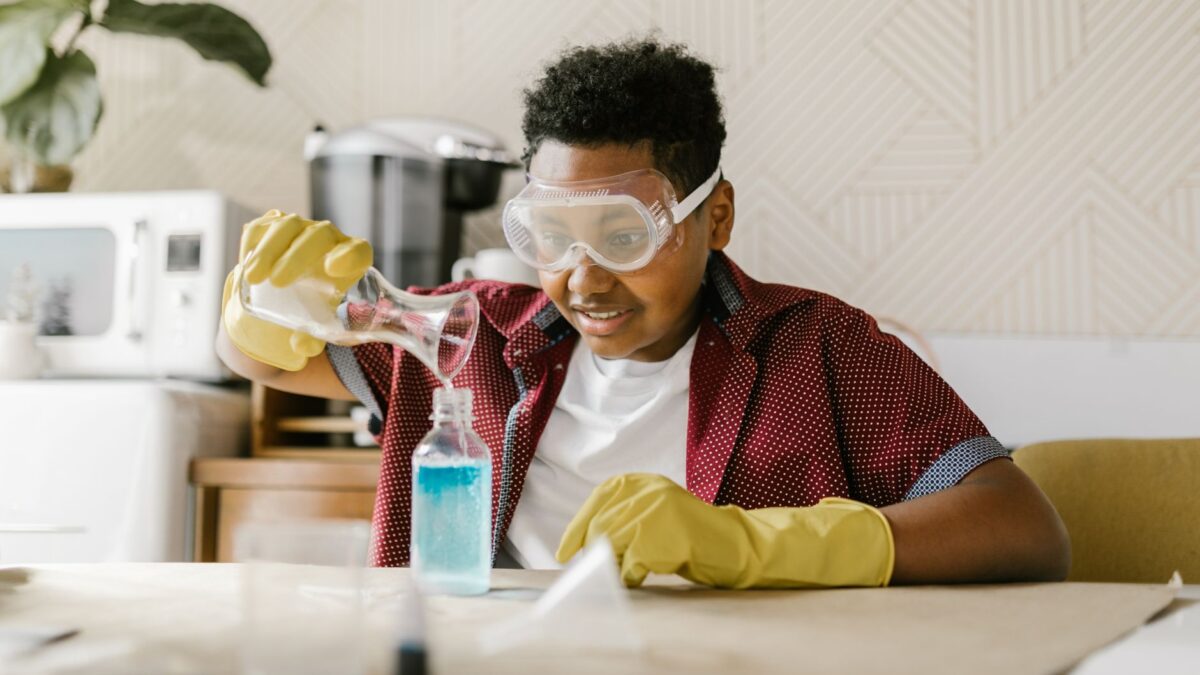
You can run good science experiments at home with items from the kitchen: baking soda, vinegar, cornstarch, milk, salt and food coloring. The ten below are sorted by age, and each notes how much adult help is needed, what it shows and how to clean up. Do each one on a tray, with the adult close by, and let children make a guess before they begin.
Safety first
- Never taste or smell experiment mixtures unless the activity is a food. Treat everything as not for eating.
- Keep cleaning products out of experiments. Never mix household cleaners, and do not use them as test items.
- Have children wear safety glasses or sunglasses for anything that fizzes or splashes.
- Adults handle hot water, knives and anything with a heat source.
- Check for allergies before you use milk, flour, cornstarch or other food items.
- Wash hands after each activity.
- If a child swallows something, call the Poison Help line at 1-800-222-1222.
Ten experiments at a glance
| Experiment | Ages | Adult help | Cleanup |
|---|---|---|---|
| Sink or float | 3 to 8 | Low | Dry items, empty tub |
| Oobleck | 3 to 10 | Low | Wipe into trash, not the drain |
| Walking water | 4 to 8 | Low | Toss paper towels |
| Color-change celery | 4 to 8 | Low | Compost the celery |
| Baking soda fizz | 4 to 10 | Medium | Rinse tray |
| Rainbow milk | 5 to 10 | Medium | Rinse plate |
| Salt lava lamp | 6 to 10 | Medium | Oil in the trash |
| Static electricity | 6 to 10 | High (balloons) | Collect balloon pieces |
| Red cabbage color test | 8 to 12 | High (hot water) | Wash stained items |
| Salt crystals | 8 to 12 | High (hot water) | Rinse jar |
Ages 3 to 5: simple and sensory
1. Sink or float
Fill a tub with water and gather a few household items, such as a spoon, a cork, a coin, a grape and a sponge. Ask your child to predict which will sink, then drop each one. What it shows: some things are lighter for their size than water and float. Skip small items like coins and grapes if there are children under 4 nearby, because of choking risk.
2. Oobleck
Mix about two parts cornstarch with one part water in a bowl, a little at a time, until it is thick. Squeeze it, then let it drip. What it shows: it acts like a solid when squeezed and like a liquid when relaxed. Wipe the mixture into the trash, as cornstarch can clog drains.
3. Walking water
Line up three cups. Fill the outer two with colored water and leave the middle one empty. Fold a paper towel strip in half and run each end from a full cup into the empty one. What it shows: the water climbs through the paper and mixes in the middle cup. It takes a few hours.
4. Color-change celery
Stand a celery stalk with leaves in a glass of water with several drops of food coloring and leave it overnight. What it shows: the plant draws water up through tiny tubes, and the color shows up in the leaves.
Ages 5 to 8: fizz and swirl
5. Baking soda fizz
Put a spoonful of baking soda in a pan or cup, add a drop of food coloring, and pour in vinegar with a dropper or spoon. What it shows: the two react and make carbon dioxide gas, which makes the bubbles. Safety glasses are a good idea. Rinse the tray with water.
6. Rainbow milk
Pour whole milk onto a plate, add drops of food coloring in different spots, then touch the surface with a cotton swab dipped in dish soap. What it shows: the soap breaks the milk’s surface tension and fat, so the colors swirl. Do not drink the mixture.
7. Salt lava lamp
Fill a clear jar about two-thirds with water, add a layer of cooking oil on top, then add a few drops of food coloring. The drops sit on the oil first. Sprinkle in salt and watch. What it shows: oil floats on water, and salt pulls blobs of oil down. Pour the oil into the trash, not the drain.
8. Static electricity
An adult blows up a balloon. Rub it on dry hair or a wool sweater, then hold it near small paper bits or a thin stream of water from the tap. What it shows: rubbing builds up static charge that attracts light things. The CPSC warns that uninflated or broken balloons are a choking and suffocation hazard for children under 8, so keep them supervised and pick up pieces right away. See the CPSC’s balloon warning. It often works better in dry winter air.
Ages 8 to 12: more observation
9. Red cabbage color test
An adult chops red cabbage and steeps it in hot water, then strains out the purple liquid once it cools. Pour a little into clear cups and add different kitchen items, such as lemon juice, vinegar or baking soda dissolved in water. What it shows: the liquid turns pink with acids and blue or green with bases. Use food items only. Wear old clothes, because it stains.
10. Salt crystals
An adult stirs salt into hot water until no more will dissolve, then pours it into a clean jar. Hang a string or a pencil with a string in the jar, and leave it somewhere still. What it shows: as the water slowly evaporates, salt crystals form. It can take several days.
How to make it real science
- Ask a question. What will happen if we add more vinegar?
- Make a guess. Write it down before you begin.
- Change one thing. Try warm water instead of cold, or a different object.
- Observe closely. Count bubbles, time the fizz and draw what you see.
- Talk about it. Was your guess right? What would you try next?
Keep a science notebook, even if it is only drawings. For more activity ideas see our list of rainy day activities for kids or the boredom jar for quick picks. In winter, try our snow science experiments.
Bottom line
Kitchen science is cheap, quick and memorable. Choose one experiment that fits your child’s age, set up a tray, keep safety glasses and an adult close, and let your child guess before they see what happens. Clean up the right way, and keep notes if they want to try it again.
FAQ
What is the easiest experiment to start with?
Sink or float for young children, and baking soda and vinegar for older ones. Both use things you already have.
Are baking soda and vinegar safe?
They are common kitchen items and the reaction is mild, but splashes can sting eyes. Use safety glasses, a tray and adult supervision.
How do I explain the science to a young child?
Use simple words: Gas made bubbles. Soap pushed the colors. Keep it short and let questions lead.
Can we do these with different ages together?
Yes. Older children can lead the steps and explain the results to younger ones. Keep small items away from children under 4.