Thanksgiving Activities for Kids While the Meal Cooks
Set out three or four simple activities before guests arrive and swap them in every half hour. Here are ideas sorted by age and by how much grown-up help they need.
The easiest way to keep kids busy while the Thanksgiving meal cooks is to set out three or four activities before the first guest arrives and swap them in every 30 to 45 minutes. Mix one quiet activity, one that burns off energy and one the kids can do on their own, then add a snack station so nobody hovers around the oven. Thanksgiving falls on Thursday, November 26 in 2026, so you have time to gather supplies.
How to plan the kids’ hours
The hours before dinner are usually the hardest, because children are hungry, guests are arriving and the adults are busy. A little structure helps more than a long list of ideas.
- Pick by adult help, not just age. Choose at least two activities that need no grown-up at all, so you are not the only entertainer.
- Stage everything in advance. Put supplies in a tray or box, one per activity, and keep them on a table the kids can reach.
- Alternate energy levels. Follow a loud, active game with a quiet one.
- Give older kids a job. Children aged about 8 and up often like having a real role, such as running the music or hosting the games.
At a glance
| Activity | Best ages | Setup | Adult help |
|---|---|---|---|
| Coloring placemats | 2 to 6 | 5 minutes | None |
| Thankful scavenger hunt | 4 to 8 | 10 minutes | Low |
| Pillow-cushion obstacle course | 3 to 9 | 10 minutes | Low |
| Helper jobs in the kitchen | 3 and up | None | High |
| Card and board games | 6 and up | 2 minutes | None to low |
| Backyard touch football or tag | 6 and up | None | Low |
| Thankful interviews | 8 and up | 5 minutes | None |
Ages 2 to 4
Toddlers and preschoolers need short, hands-on activities and a grown-up within sight. Keep small pieces away from children under 3 and watch young children around beads, dried beans and other small items; the American Academy of Pediatrics keeps a choking prevention page with details.
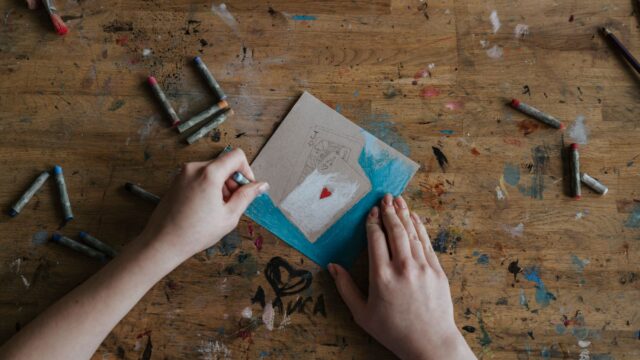
- Coloring placemats (no help, 5 minutes). Tape a sheet of plain paper at each seat or table spot with a few crayons. Larger crayons are easier for small hands.
- Pom-pom or ball drop (low help, 5 minutes). Cut a hole in a box lid or use a muffin tin and let kids sort soft balls by color. Use balls too big to fit through a toilet paper tube if a child still mouths objects.
- Sticker collage (no help, 3 minutes). Give each child a paper plate and a sheet of stickers to decorate, which doubles as a table decoration.
- Kitchen helper job (high help, 0 minutes). Tearing lettuce, washing vegetables in a bowl or stirring something cool can make a toddler feel included. This needs an adult standing right there.
Ages 5 to 8
This group likes challenges with a clear goal and a way to win or finish.
- Thankful scavenger hunt (low help, 10 minutes). Write 8 to 10 clues such as “something soft you are thankful for” or “something that makes you laugh,” and let kids find the answers in the house. Pair a younger child with an older one.
- Living room obstacle course (low help, 10 minutes). Cushions to hop over, a hallway to crawl through and a line of tape to tiptoe along. Our guide to indoor obstacle courses has layouts by age.
- Turkey tracing (no help, 5 minutes). Kids trace a hand on paper, add a face and write one thing they are grateful for on each finger.
- “Who am I?” game (none to low help, 2 minutes). Tape a picture of an animal or character to each child’s back and let them guess with yes-or-no questions.
Ages 9 to 12 and teens
Older kids often resist anything that seems like “kid stuff,” so offer choices and real responsibility.
- Thankful interviews (no help, 5 minutes). Hand over a phone or notebook and a list of three questions, and let them collect answers from relatives. It makes a lasting keepsake.
- Games tournament (no help, 2 minutes). Cards, dominoes or a board game with a simple bracket. Our family game night guide lists options by age.
- Football or tag outside (low help, 0 minutes). Anything that gets everyone outdoors before the meal. See our list of backyard games if the group is mixed-age.
- Table crew (low help, 10 minutes). Let them fold napkins, fill water glasses or make the place cards.
Set up a snack station
Kids who are hungry at 2 p.m. will not wait until the turkey comes out. A small snack station near, but not in, the kitchen keeps small hands out of the way.
- Offer easy, filling items like cheese cubes, crackers, sliced apples, vegetable sticks with dip and a pitcher of water.
- For children under 4, cut round or firm foods into small pieces. The AAP lists whole grapes, nuts, popcorn, hot dogs and chunks of cheese among the foods to prepare carefully or hold back until age 4 or older, depending on the child.
- Put out a small portion at a time. Perishable food that sits out for more than two hours is a food-safety concern, so refill rather than leave a full tray all afternoon.
- Keep a grown-up-only zone near the oven and stove, with a clear line the kids can see.
Bottom line
Treat the pre-dinner stretch as a short schedule: a craft, a game, a burst of outdoor play and a snack. Prepare supplies the night before, choose activities that need little supervision and give older kids a role. If you want a project that also decorates the table, try the ideas in our Thanksgiving crafts for kids.
FAQ
How do I keep toddlers busy without much prep?
Use a tray of paper, crayons and stickers, or give them a safe kitchen job like washing vegetables in a bowl. Keep activities to about 10 minutes each, and stay close.
What if the weather is bad?
Move the active game inside with a hallway obstacle course, a dance-off or a “floor is lava” cushion route. Clear the walking path first and keep it away from the kitchen.
How many activities should I plan?
Three to five is plenty for a few hours. Having a spare activity ready for when the first one flops matters more than a long list.
Should I ask other parents to bring something?
Yes. Guests with kids often welcome a simple request, such as bringing a favorite card game or a book to share. It spreads out the work.