How to Teach Kids to Write Thank-You Notes (With Templates)
A gift list, one note night and age-based fill-in wording make thank-you notes quick. Here is the routine, with templates from toddlers to teens.
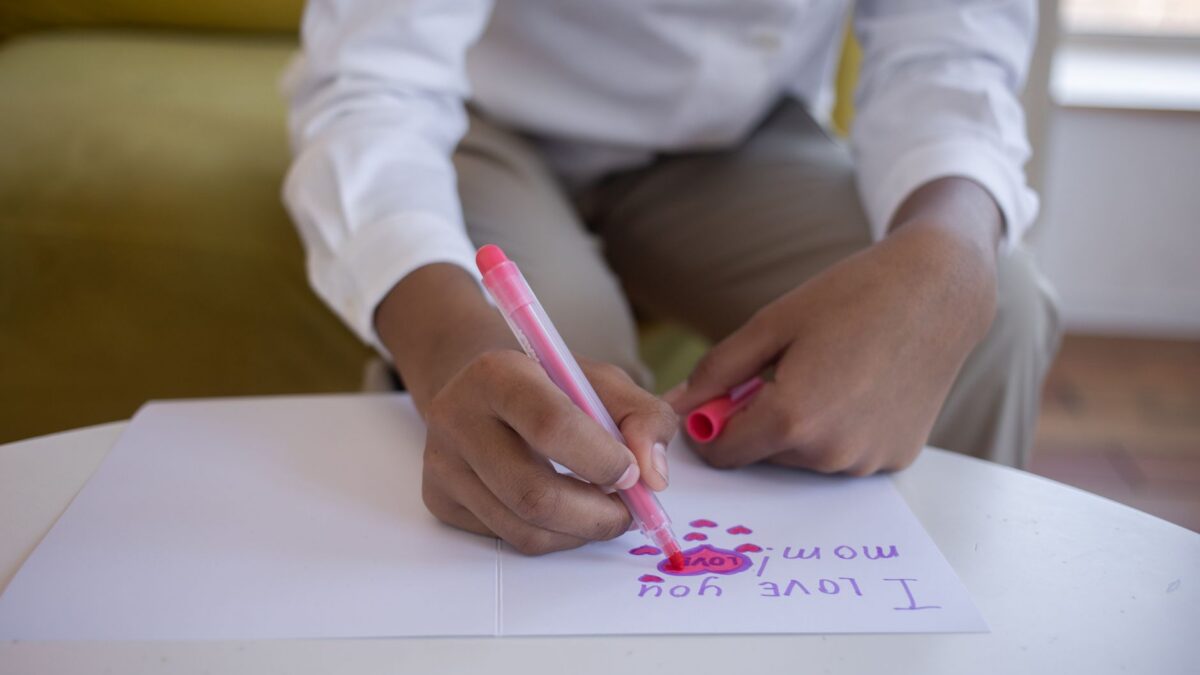
The simplest way to get kids writing thank-you notes is to make it a short, regular routine: keep a gift list, pick one “note night” within a couple of weeks of the holiday or birthday, and give kids fill-in-the-blank wording that matches their age. Toddlers can draw, early writers can complete a few lines, and older kids can write three sentences. Here is a step-by-step routine with templates you can copy.
Why bother with notes?
A thank-you note tells someone their effort was noticed. It also gives children practice at writing, noticing what they like and putting a feeling into words. It does not need to be fancy, long or perfect. A note that arrives a bit late is still better than none.
The routine, step by step
- Keep a gift list. As presents are opened, write down who gave what. A phone note or a sheet of paper taped inside a cupboard works. Include a line about the child’s reaction, such as “loved the puzzle.”
- Gather supplies in one box. Cards or plain paper, pens, stickers, envelopes, stamps and a list of addresses. Having everything together removes most of the excuses.
- Pick the “note night.” Choose one evening within a week or two of the event. Put it on the calendar like any other appointment.
- Sort by age. Younger children draw or dictate. Older children write. Everyone signs their own name.
- Work in short blocks. Ten to fifteen minutes is enough for young children. Write a few notes each night rather than all of them at once.
- Address and mail. Let kids add stickers and press the stamp. Seeing the envelope go out gives a sense of completion.
- Check them off. Cross each name off the gift list as the note goes out.
Fill-in wording by age
| Age | What the child does | Sample wording |
|---|---|---|
| 2 to 4 | Draws a picture, the adult writes a line, the child signs or adds a scribble | “Thank you for the [gift]. I like it. Love, [name].” |
| 5 to 7 | Fills in the blanks | “Dear ___, Thank you for the ___. I like it because ___. Love, ___.” |
| 8 to 11 | Writes three sentences | Thank, say what you will do with it, ask a question |
| 12 and up | Writes a short personal note or sends a handwritten card | Thank, mention a specific detail, close with a hope or plan |
Templates you can copy
For young writers
Dear Grandma, thank you for the red truck. I like to roll it fast. Love, Sam.
For gifts of money or gift cards
Dear Aunt Jo, thank you for the gift card. I plan to use it to buy a new book, and I will tell you what it is about. Love, Maya.
For an experience or a visit
Dear Uncle Ray, thank you for taking us to the zoo. My favorite part was the penguins. I hope to see you soon. Love, Leo.
For a gift the child did not love
Focus on the person and the thought. Dear Cousin Lee, thank you for the sweater. It was nice of you to think of me. I hope you had a great holiday. Avoid asking kids to say they love something they do not.
For a teacher, coach or helper
Dear Ms. Carter, thank you for helping me with fractions. I understood them better after your lessons. Thank you for being patient.
A simple three-part formula for older kids
- Thank them by name. “Dear Grandpa, thank you for the book.”
- Say something specific. “I have already read the first three chapters, and the dragon is my favorite.”
- Close with a connection. “I hope we can visit soon.”
Make it easier
- Use photos. A picture of the child with the gift, printed or sent digitally, can be the whole note for a distant relative.
- Record a video. For relatives who live far away, a 20-second message is a good option if they enjoy video.
- Use a text or email for friends and relatives who use them, and save handwriting for grandparents and older relatives.
- Write at the same time. Adults can write their own notes at the table; kids tend to follow.
- Offer a choice. Let kids pick the pen, the paper or which note to do first.
If the stack feels too big
After a big birthday party or the holidays, it is okay to prioritize. Start with grandparents and relatives who mailed gifts, then close friends. A group note from the family for larger gatherings is fine. The goal is to build a habit, not to hit a perfect record. Our family calendar system guide shows one way to schedule recurring tasks like this.
Tie it into the rest of the year
Thank-you notes work best when they connect to a bigger habit of noticing what other people do. You can pair them with a weekly gratitude moment from our gratitude activities for kids. They also fit nicely at the end of a birthday tradition or after Christmas traditions for families.
Bottom line
Keep a gift list, hold one weekly note night, use age-based templates and let kids sign their own names. Short and sincere beats long and late. If notes become a pleasant part of the holidays, you have done the hard part.
FAQ
How soon should kids send thank-you notes?
Aim for within a couple of weeks, but a late note still counts. If you are behind, send it anyway with a short line like “Sorry this took a while.”
Do kids need to write by hand?
Handwritten notes feel personal, but a typed note, a card with a photo or a video can also work for friends and distant relatives.
What if my child refuses?
Shorten the task to one sentence or a drawing, and take care of the rest yourself. Avoid making it a punishment, which may make the habit harder to build.
Should I proofread a child’s note?
Fix anything that would confuse the reader, but leave childish spelling and phrasing in place. The relatives usually love it.