Summer Camp at Home: 6 Weekly Themes, a Daily Schedule and Cheap Supplies
A home camp gives summer some shape without a big bill. Here are six themed weeks, a daily schedule, a supply list and ideas for working parents.

A summer camp at home works best with a theme for each week, the same daily rhythm and a bin of cheap supplies. Plan about two to three hours of structured activity in the morning, then leave the afternoon for quiet time and free play. Below are six themed weeks, a sample schedule and tips for parents who work during the day.
How to set it up
- Choose the length. One week is enough to try it. A full summer can run four to eight weeks.
- Name your camp. Let the kids vote on a name, a motto and a camp “uniform”, such as a colored T-shirt.
- Set a daily rhythm. A familiar order helps, even when the activities change.
- Build a camp bin. Gather supplies in one bin or shelf so setup is quick.
- Plan three activities a day. One active, one creative and one quiet is a good balance.
- Prep the night before. Lay out materials and print any pages.
- Let kids choose. A “camper’s choice” slot each day builds buy-in.
Sample daily schedule
| Time | Block | Ideas |
|---|---|---|
| 8:30 | Morning meeting | Camp song, weather check, choose jobs, read the day’s plan |
| 9:00 | Theme activity | The main project of the day |
| 10:15 | Snack and outdoor play | Chalk, bikes, sprinkler |
| 11:00 | Skills block | Craft, experiment, cooking or game |
| 12:00 | Lunch and cleanup | Everyone helps |
| 1:00 | Quiet time | Reading, audiobooks, puzzles, drawing |
| 2:00 | Free choice | Camper’s pick |
| 3:00 | Share and wrap-up | Show what you made, sing the camp song |
Adjust the times to your family. Younger children usually need shorter blocks and an earlier quiet time.
Six weekly themes
| Week | Theme | Sample activities |
|---|---|---|
| 1 | Nature Explorers | A nature scavenger hunt, a bug hotel from sticks and cardboard, leaf rubbings, a map of the yard |
| 2 | Mad Scientists | Sink-or-float tests, baking soda and vinegar, a rain gauge. See easy science experiments at home |
| 3 | Art Studio | Tape-resist painting, a cardboard sculpture, collage from old magazines, a family art show |
| 4 | Splash Week | Sprinkler games, a sponge relay, water painting on the fence, a car wash for bikes |
| 5 | Chef Camp | Plan a menu, make pizza or tacos, bake, set a restaurant night with menus and a waiter |
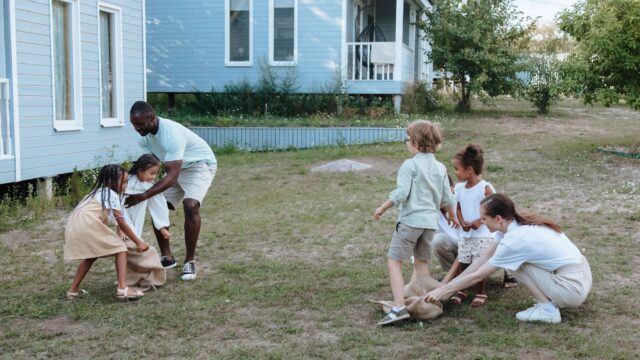
| 6 | Camp Olympics | Backyard races, an obstacle course, relay games, medals from cardboard. Browse our backyard games |
Sample week: Nature Explorers
- Monday: Make camp badges and a map of the yard or nearest park.
- Tuesday: Go on a scavenger hunt and press leaves between heavy books.
- Wednesday: Build a bug hotel and watch for visitors.
- Thursday: Cook outside, such as a picnic lunch, and draw what you see.
- Friday: Share a nature museum of the week’s finds, then take photos and return everything outdoors.
Bonus themes
- Around the World: Choose a country a day, make a flag, learn a greeting and try a snack.
- Story Week: Write and illustrate a book, or put on a puppet show.
- Space Week: Make a cardboard rocket, stargaze after dark and draw constellations.
Cheap supplies to stock
- Cardboard boxes, paper towel tubes and recycled containers
- Paper, markers, crayons, glue, tape and safety scissors
- Sidewalk chalk, bubbles and a few balls
- Baking soda, vinegar and food coloring
- Pantry staples for cooking days
- Library books and audiobooks (free with a library card)
- A cheap clipboard, notebook or journal for each camper
For working parents
- Make a shorter camp. One or two guided activities in the morning and evening, and independent blocks in between.
- Prep camp cards. On Sunday, write activities on index cards. Kids pick one when they have finished the last.
- Use a visual schedule. A picture list on the fridge helps kids know what comes next without asking.
- Share with another family. Trade hosting days with a neighbor or friend so each adult covers a day or a half-day.
- Add outside programs. Many public libraries and community centers offer free or low-cost summer sessions, so check schedules.
- Give older kids a role. A camper can lead a game or a craft, with an adult nearby.
- Keep expectations realistic. A loose plan that happens is better than a packed schedule that doesn’t. Young children need an adult close by, and the age at which older kids can stay on their own varies, so ask your local school or authorities for guidance.
Sun and water safety
For outdoor days, follow the American Academy of Pediatrics (AAP) basics. The AAP sun safety page recommends broad-spectrum sunscreen with an SPF of 15 or higher, shade, hats, and limiting sun around midday, when it is strongest. For water play, the AAP advises an adult within arm’s length of infants, toddlers and weak swimmers. See the AAP drowning prevention guidance. Ask your pediatrician if you have questions about your child’s needs.
For more ideas to fill the weeks between themes, see our summer bucket list for kids.
Bottom line
A home camp does not need a big budget. Choose a theme per week, repeat a simple schedule, stock a camp bin and keep a quiet hour in the afternoon. If you work during the day, cut it back to a short, prepared version and share the load with other families.
FAQ
How much should you plan each day?
Two to three hours of structured activity is plenty. Leave the rest for lunch, quiet time and free play, which are also part of camp.
What ages does this work for?
Preschoolers to preteens. Shorten blocks for little ones, and give older children leadership jobs.
Do we have to do all six weeks?
No. Run one week, or mix and match the themes. Bring back the favorites in later weeks.
How can we keep it affordable?
Use recycled materials and pantry items, borrow books from the library and choose free outings. Your biggest cost may be snacks.