Screen-Free Play Ideas for 5-Year-Olds, by Time Available
Five-year-olds can play for long stretches when they have the right materials and a little help getting started. Here are ideas sorted by how much time you have.
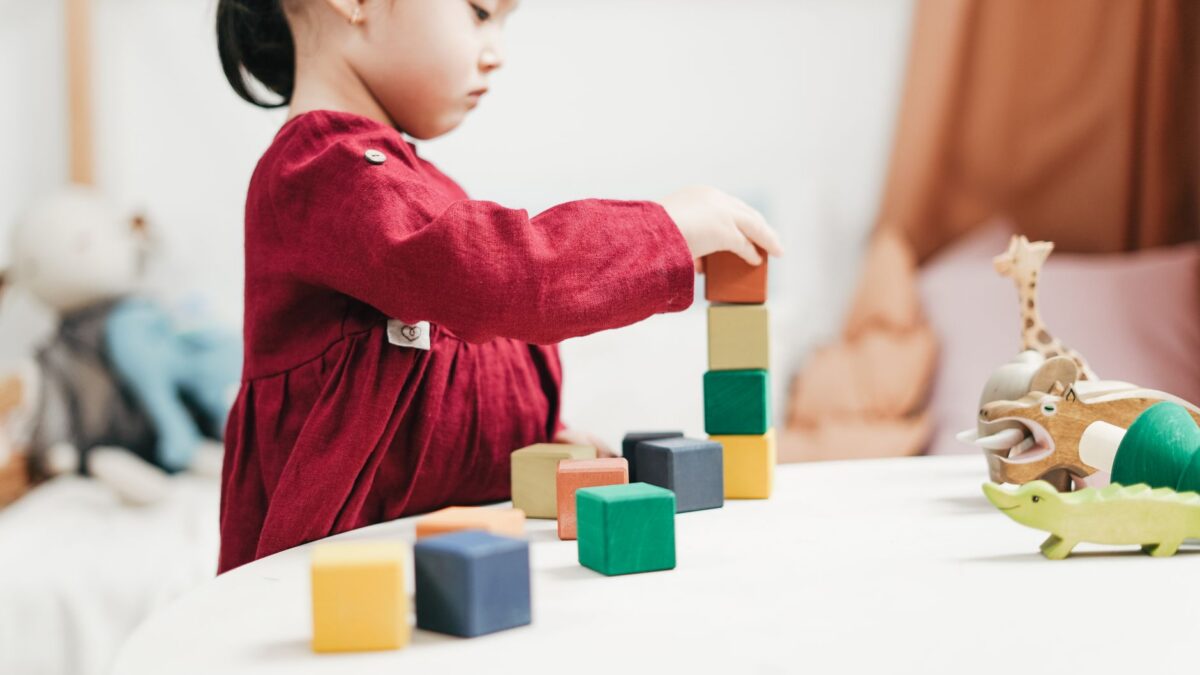
Five-year-olds do best with screen-free play when they have a clear starting point, open-ended materials and an adult nearby for the first few minutes. Use the lists below by how much time you have: five minutes, 15 to 30 minutes, or an hour or more. Building, pretend play, simple science and helping at home all work well at this age.
Why this age is a good time to build the habit
By age 5, many children can follow multi-step directions, play pretend with a story, and stick with a task for a while. They also want to feel capable. That makes this a good time to build a habit of playing without a screen. The American Academy of Pediatrics suggests that families create a family media plan and keep screens from crowding out play, sleep and reading. For guidance about your own child, talk to your pediatrician or your child’s teacher. Looking for other ages? See our chart of screen-free activities by age.
If you have 5 minutes
- I Spy. Use colors, shapes or beginning sounds.
- Draw a map of the room. Add an X for treasure and let your child lead you there.
- Silly walks. Hop like a frog, tiptoe like a cat, stomp like an elephant.
- Rhyme time. Take turns naming words that rhyme with a chosen word.
- Count it. How many red things can you find? How many steps to the kitchen?
- Squishy play dough. Make a snake, a pizza or an animal.
If you have 15 to 30 minutes
Building and making
- Blocks and bricks. Give a challenge: build the tallest tower, a house for a toy or a bridge a car can drive over.
- Cardboard creations. Boxes, tubes and tape become robots, cars or a puppet theater.
- Art tray. Offer paper, crayons, stickers and child-safe scissors, and let your child choose.
- Collage. Cut pictures from old magazines or catalogs and glue them onto paper.
Pretend play
- Restaurant. Draw a menu, take orders and “cook” using pots and pans.
- Vet or doctor’s office. Stuffed animals are patients; bandages and a toy stethoscope are tools.
- Store. Use pantry items with price tags and play money.
- Puppet show. Use socks, paper bags or stuffed animals and ask for a performance.
Simple science and nature
- Sink or float. Test household objects in a bowl of water, then sort them into two piles.
- Magnet hunt. Walk around the house with a magnet and find what sticks.
- Ice melt race. Put ice cubes in different places and see which melts first. Our guide to easy science experiments at home has more ideas.
- Bug or bird watch. Draw what you see on a clipboard.
Helping at home
- Kitchen helper. Wash vegetables, stir batter, pour measured ingredients or tear lettuce. An adult handles heat and knives.
- Laundry sort. Match socks, sort by color or fold washcloths.
- Table setter. Place napkins, forks and cups.
- Plant care. Water a plant, wipe leaves or plant seeds in a cup.
If you have an hour or more
- Build a fort city. Use blankets, chairs and boxes, then add stuffed animals as residents.
- Backyard or park adventure. Take a magnifying glass, a bucket and a notebook. See our outdoor play ideas for more.
- Bake a snack together. Measuring, pouring and waiting are good practice.
- A craft project. Paint a cardboard castle or make a collage that takes more than one session.
- Library trip. Let your child pick a few books and choose a favorite to read together.
- Pretend trip. Pack a bag, “drive” a box car and plan a pretend vacation.
Helping a 5-year-old play alone
Independent play is a skill, and it grows with practice. Try these steps:
- Start with 10 minutes. Set a visual timer so your child can see how much time is left.
- Set up an invitation to play. Place a tray with a few materials, such as animals and blocks, where your child will see it.
- Get things started. Sit with your child for the first few minutes, then move away but stay in the room.
- Limit the options. A smaller choice often leads to deeper play than a room full of toys.
- Do not rescue too quickly. A moment of “I’m bored” often leads to a new idea. Our boredom jar helps when ideas run dry.
- Praise the effort, not just the result: “You worked hard on that tower.”
- Extend the time gradually. Add five minutes at a time as it gets easier.
Safety notes
- Use child-safe scissors and supervise cutting, glue and kitchen jobs.
- Keep small pieces, such as beads and small magnets, away from younger siblings and any child who still mouths objects.
- Supervise balloons: the CPSC warns that children under 8 can choke on uninflated or broken ones.
- Supervise all water play, even with a shallow bowl or tub.
Bottom line
For 5-year-olds, screen-free play works best when you match the activity to your available time. Keep five-minute games in your pocket, set up an open-ended tray for 15 to 30 minutes and plan a bigger project or outing for an hour or more. Build independent play in short steps, and check in with your pediatrician or your child’s teacher if you have questions about attention or development.
FAQ
How long should a 5-year-old be able to play alone?
There is no set standard, and it varies a lot from child to child. Some 5-year-olds happily play alone for a good stretch with the right materials, while others need more company. Start with a short block, build up gradually and talk to your pediatrician or teacher if you have concerns.
What are the best toys for a 5-year-old?
Open-ended items such as blocks, art supplies, dress-up clothes, toy animals, play dough and simple games. Look for age labels on toys and avoid small parts if there are younger children at home.
What if my child says “I’m bored”?
Treat it as an invitation, not an emergency. Offer a choice of two activities or point to a list on the fridge, then give the child time to get started.
How much screen time is okay at this age?
The AAP recommends a family media plan that fits your child and your family’s values rather than a single number for all children. Talk to your pediatrician about what is right for your child.